Industrial Automation

Developing the Autonomous Factory

The Challenge: Static vs. Dynamic

Traditional manufacturing lines are rigid. They require costly reprogramming for every product change. In today's market, where customization is key, factories need flexibility.

Our Solution:

We engineered a Self-Adapting Production Unit. Using computer vision and modular robotic arms, our system identifies products in real-time.

Key Objectives Achieved:

  • Reduced changeover time by 85%.
  • Zero-error sorting using AI Vision.
  • Seamless integration with legacy conveyors.
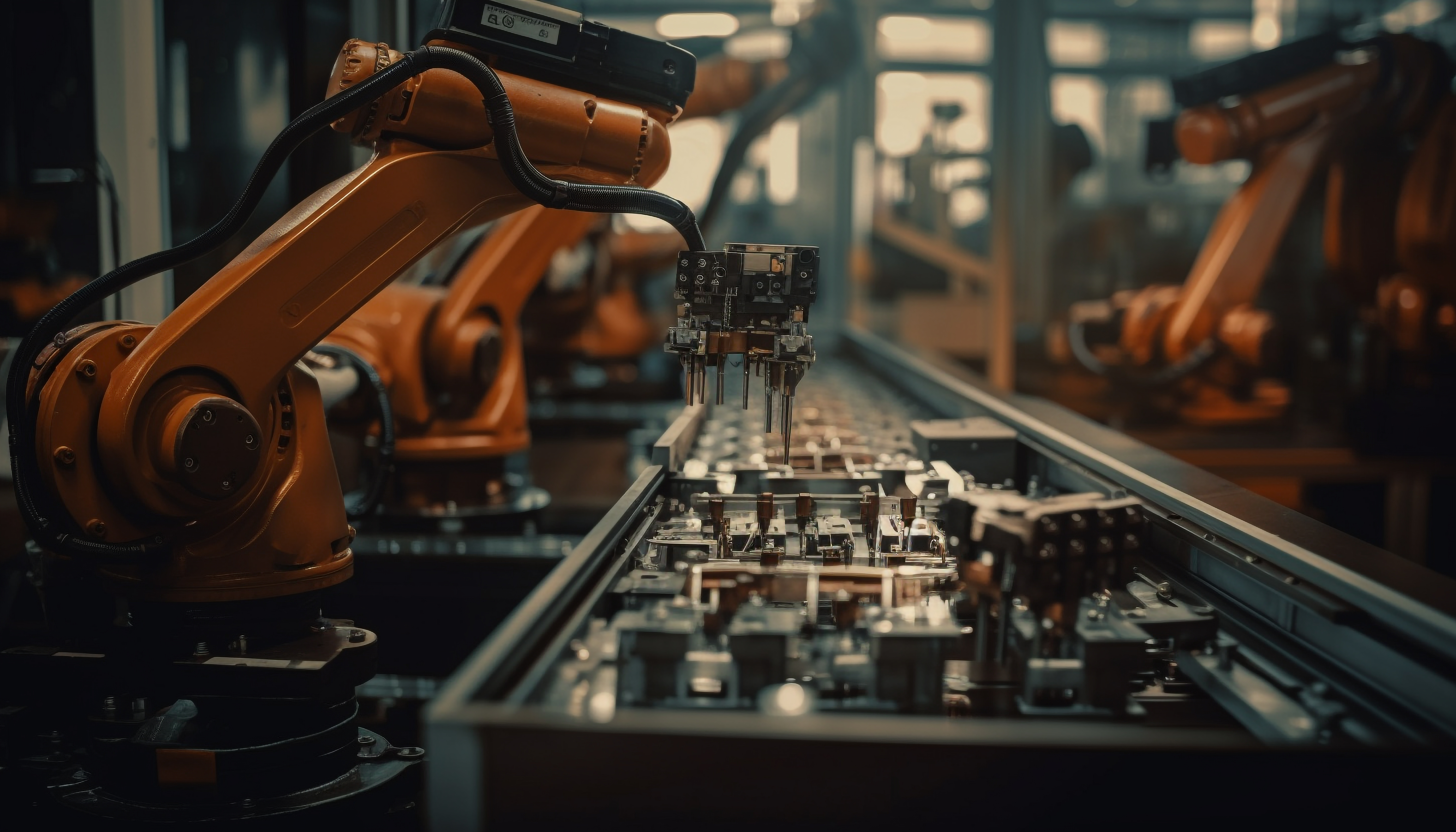
Robotic Arm Working
AI

Powered By

Neural Networks

Methodology

How We Engineered It

Our research follows a rigorous four-stage lifecycle to ensure industrial viability.

01

Digital Twin

We first built a complete replica of the factory floor in NVIDIA Omniverse to test physics without risk.

02

Algorithm Training

Reinforcement learning models were trained on millions of synthetic scenarios to handle edge cases.

03

Hardware Dev

Custom end-effectors (grippers) were 3D printed and CNC machined to handle delicate payloads.

04

Deployment

Integration with PLCs and SCADA systems for real-time monitoring and control.
Architecture

System Control Logic

High-level schematic of our autonomous control loop and data flow.

Perception

LiDAR Point Cloud
+ Stereo RGB Input

Neural Core

YOLOv8 Identification
+ Path Planning

Actuation

Inverse Kinematics
+ Motor Control

Datasheet

Technical Specifications

Degrees of Freedom
6-Axis Articulated
Payload Capacity
Up to 25kg (Dynamic)
Reach Radius
1800mm Max Reach
Vision System
LiDAR + Stereo Depth
Connectivity
5G / Ethernet / WiFi 6
SYSTEM_VIEW_04
Robotic System

System Status

Operational